
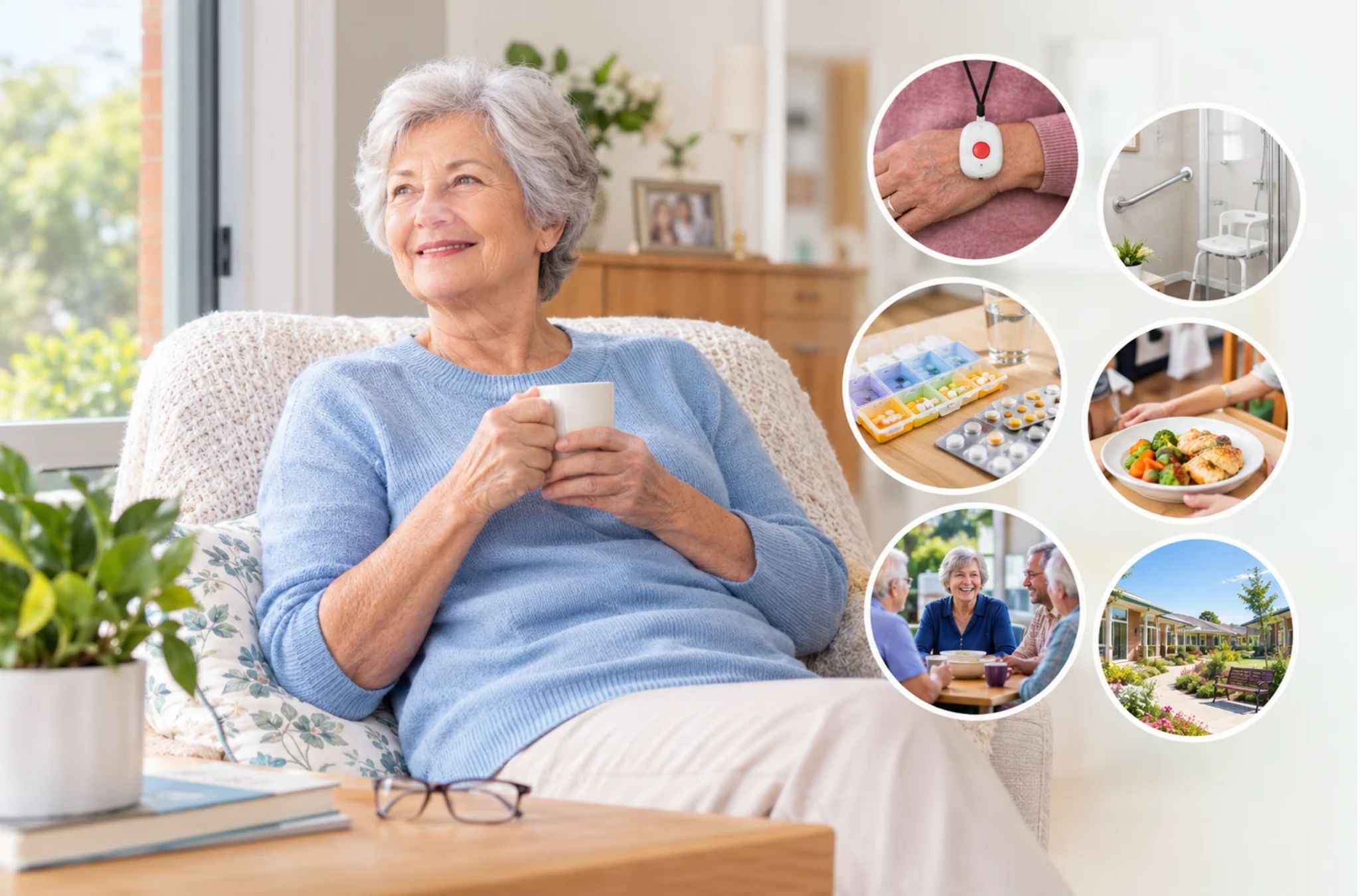
You enjoy your daily routine, your kitchen, and having your own front door. And you’re managing just fine.
But lately, there might have been a few moments. A wobble on the back step. A night when you felt unwell and wondered who you’d call.
Many Australians are in the same position. Half of all women living alone are aged 65 or over, as are about a third of men. Most of them are happy and well. Still, elderly living alone comes with some risks worth knowing, so you can stay safe and make choices on your own terms.
In short: The main risks are falls, medication mistakes, poor nutrition, loneliness, hot weather, and scams. Small tweaks around the house go a long way. If daily life starts to feel harder, you also have several options, from in-home support to a move into a retirement village.
Is It Safe for an Older Person to Live Alone?
Yes, it can be. Your age alone doesn’t decide it. What matters most is how easily you manage day-to-day routines, and how quickly someone would know if you needed help.
Most of us overlook that second point. Living alone isn’t the risk. Living alone with nobody checking in is.
The Most Common Safety Risks for Elderly Living Alone
Falls, and Not Being Able to Get Up
Falls are the number one cause of injury for older Australians, and about half of them happen at home. A loose rug, a wet bathroom floor, or a dark hallway at night is often all it takes.
When you live alone, the bigger worry is what happens after a fall. If you can’t stand up or get to your phone, you might be stuck on the floor for hours. Doctors call this a “long lie”. It can lead to dehydration, pressure sores, and chest infections, even if the fall itself caused only a small injury.
Mixing Up Your Medicines
Many of us take several tablets a day. It’s easy to forget a dose or take one twice. Mix-ups like these can cause dizziness, which can then lead to a fall.
Not Eating Well
Cooking for one can feel like a lot of fuss, so you may end up having tea and toast for dinner more often than you should. Over time, you may lose weight and strength.
Feeling Lonely
Loneliness is more than a sad feeling. Over time, it’s linked to poorer heart health, low mood, and memory problems. A University of Sydney study released in September 2026 found that social isolation in Australia has roughly doubled over the past 20 years, and older people have been hit hardest.
Hot Weather
South Australian summers can be fierce. As we age, our bodies don’t cool down as well, and we often don’t feel thirsty even when we need water. Turning off the air conditioner to save money during a heatwave can be dangerous.
Scams
Scammers often target older people living on their own, pretending to be a bank or even a grandchild in trouble. Without someone nearby to check with, it’s easier to be caught out.
No One to Notice Small Changes
Stroke symptoms, such as a drooping face or slurred speech, need urgent medical help. When you see people every day, someone is more likely to notice these changes early.
How Do I Know When It’s Time to Stop Living Alone?
There’s rarely one big moment. Most of the time, it’s those little things that start adding up. Ask yourself, honestly:
● Have I had a fall, or a near miss, in the past year?
● Am I avoiding the shower or the stairs because I’m worried about slipping?
● Is cooking, cleaning, or gardening becoming too much?
● Have I forgotten my tablets, or taken them twice, more than once?
● Am I going days without talking to anyone?
● Has my family started to worry about me?
If you said yes to any one, you may simply need a little extra help. If you said yes to three or more, it’s a good time to talk with your GP and your family about what comes next.
What Can I Do to Stay Safe on My Own at Home?
Planning to stay put for a while longer? Each of these steps adds another layer of protection.
Wear a personal alarm.
Choose one with fall detection. If you fall and can’t reach the button, it raises the alarm for you.
Make your home safer.
Your GP can refer you to an occupational therapist for a home check. They can suggest grab rails, a shower chair, and better lighting.
Have your medicines checked.
Your GP can arrange a Home Medicines Review, where a pharmacist visits and goes through all your tablets. Many chemists can also pack your medicines by day and time.
Keep meals simple but regular.
Meal delivery services can take the hassle out of cooking.
Set up a daily check-in.
A quick phone call or text at the same time each morning means someone will know quickly if anything’s wrong.
Stay connected.
Local clubs, community centres, church groups, and library events give you a reason to get out and see friendly faces.
What Care Options Are Available for Older Australians?
Many people believe it comes down to two choices: stay at home or move into a nursing home. In fact, several elderly care options sit in between.
Help at Home
Since 1 November 2025, the Australian Government’s Support at Home program has helped older people stay in their own homes. It can cover services such as cleaning, meals, personal care, nursing, transport, and home modifications. To get started, you’ll need an assessment through My Aged Care, online or by calling 1800 200 422. You might have to wait a while for funding, and depending on your income, you may need to cover some of the cost.
This suits you if you’re mostly independent and just need a few hours of help each week.
A Retirement Village
A retirement village gives you your own home, such as a villa or unit, with friendly neighbours close by. You keep your independence, but you no longer have to worry about mowing lawns or fixing gutters. Most villages also have a 24-hour emergency call system. In South Australia, retirement villages must follow the Retirement Villages Act 2016, which protects residents’ rights.
This suits you if you’re still active but want less upkeep, more company, and peace of mind.
A Serviced Unit
A serviced unit sits between independent living and full-time care. Staff handle your meals, cleaning, and linen, but you still have your own front door.
This is a great choice if you can still manage on your own but find cooking and cleaning tiring.
Residential Aged Care
Often called a nursing home, residential aged care offers nursing and personal care around the clock. It’s for people who need a high level of daily care. You’ll need an aged care assessment first.
Is a Retirement Village and a Nursing Home the Same?
No. The two meet very different needs.
A retirement village is for people who can still live independently. You have your own villa or unit, come and go as you please, and live among neighbours at a similar stage of life. You don’t need an aged care assessment to move in.
A nursing home, now called residential aged care, is for people who need help with most daily tasks or nursing care. Before you can move in, you need an aged care assessment through My Aged Care.
Many retirement villages also offer serviced units or let outside care providers visit you at home. So if you need extra help down the track, you can get it without packing up and moving again.
Choosing What’s Right for You
The best decision is one you make yourself, before a fall or illness makes it for you.
First, consider the things you care about most. It might be your garden, your pet, or living close to your doctor and family. Next, talk it through with someone you trust, such as a family member, a close friend, or your GP.
Then visit a few places in person. While you’re there, ask:
- What if my care needs grow over time?
- Can I get help after hours or in an emergency?
- What are the regular fees, and what’s included?
A shared lunch and a chat with residents will tell you more than any brochure.
A Safer, Happier Next Chapter at Oasis Garden Village
If any of the safety risks for elderly living alone sound familiar, it may be time to look at your elderly care options while the choice is still fully yours.
At Oasis Garden Village in Gawler East, we’ve built our community around the very worries covered in this guide. Every unit has a 24-hour emergency call button, so help is just a press away. Our chef cooks two-course lunches and dinners each day, which you can enjoy in the dining room or have delivered to your door. You can also get help with cleaning, linen changes, medicines, and we’re right next door to Gawler Hospital.
Life here is about more than feeling safe. You’ll find social activities, peaceful gardens, a library, a billiards room, a hairdresser, and a village courtesy car and driver. And yes, we’re pet-friendly, so your furry companion can come too.Elderly living alone doesn’t have to mean living with worry. Take a look at our facilities or contact our friendly team to book a visit. You can also call us on 0476 654 209. We’d love to show you around and help you enjoy your retirement living days in Gawler.