
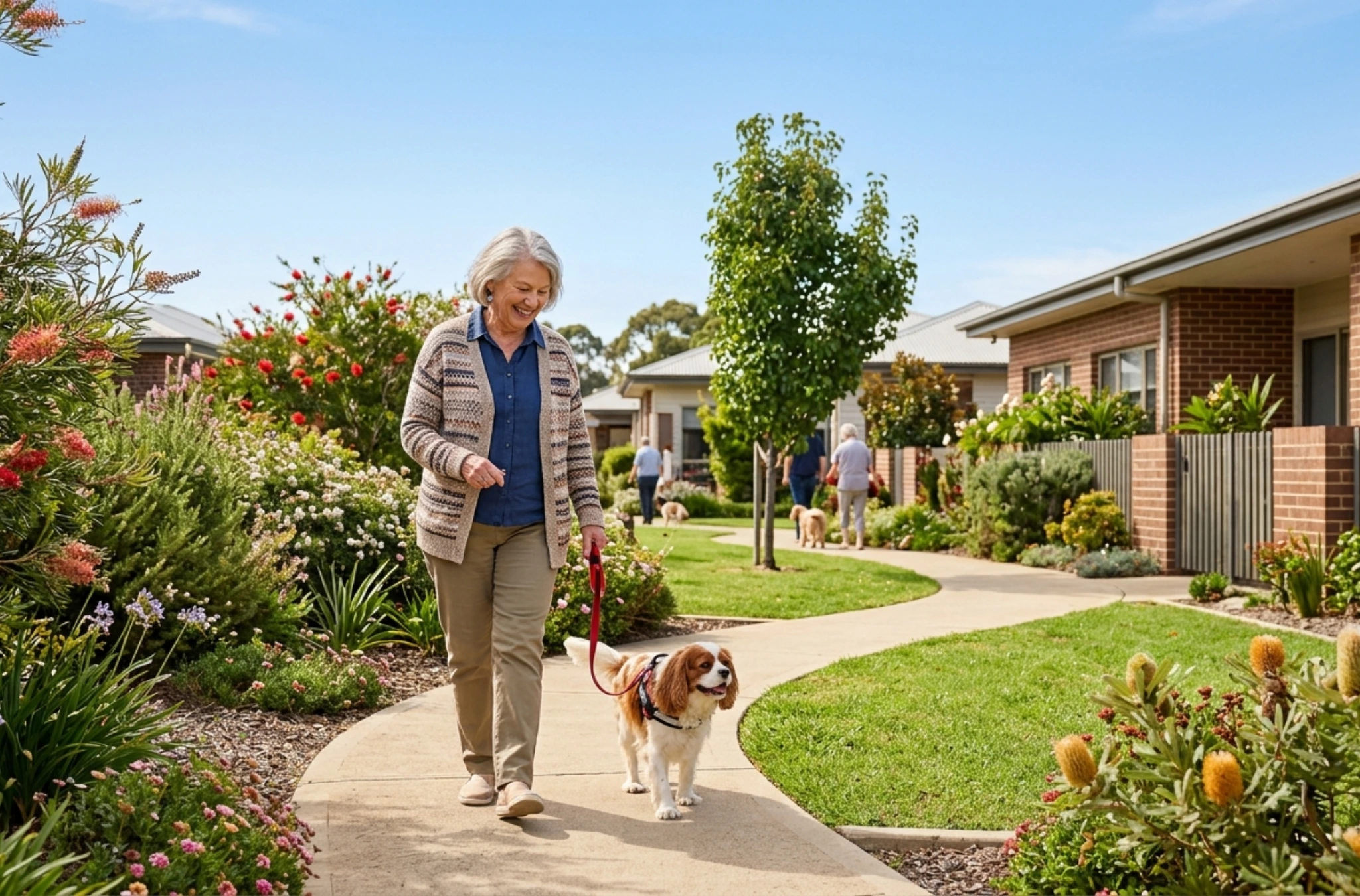
When older Australians start thinking about retirement living, one of the first questions they ask isn’t about floor plans or dining menus. It’s simpler than that: “Can my pet come with me?”
Pet friendly retirement villages are now far more common than they were even 5 years ago. But “pet-friendly” can mean very different things from one village to the next, and the difference matters once you’ve already signed a contract and moved your furniture in.
This guide walks through everything you need to know before choosing a pet friendly retirement village, from how pet approvals work to the questions worth asking on your first tour.
What Does a Pet Friendly Retirement Village Actually Mean?
On paper, it sounds simple: pets are allowed. In practice, it’s a lot more detailed than that, and the gap between villages that just permit animals and villages that are truly welcoming them into the community can be significant.
A true pet friendly retirement village usually offers 3 things together, not just one:
- P – Permission: a clear, written pet policy rather than a vague verbal assurance.
- E – Environment: gardens, courtyards, walking paths, or nearby parks that make daily pet care realistic.
- T – Temperament: the community’s own temperament toward animals, one that genuinely welcomes them as part of village life, rather than quietly discouraging them.
Missing any one of the three tends to cause friction later. A village might legally allow pets but offer nowhere sensible to walk a dog. Another might have lovely grounds but a pet policy so restrictive it rules out most household animals. Knowing the difference before you move is far easier than discovering it afterwards.
Why the Pet-Friendly Question Comes First for Many Retirees
The pet question isn’t an afterthought for many retirees; it comes before floor plans, budget, or location.
Here is why that priority makes complete sense:
- Maintaining routine: Feeding, walking, and caring for a pet can provide structure and purpose throughout the day.
- Keeping familiar companionship: Moving home is a significant life change. Having your pet by your side can provide comfort and a sense of familiarity during the transition.
- Staying active: Regular walks and everyday pet care can encourage movement and help maintain an active routine.
- Supporting social connection: Pets can make it easier to meet neighbours, start conversations and become part of a new community.
Ultimately, pets don’t just add joy; they support senior health and happiness. That is why searching for pet friendly retirement villages is the first step for many looking at their next chapter.
Are All Retirement Villages in Australia Pet-Friendly?
No. Pet policies aren’t standardised across the country and aren’t set out in retirement village legislation, which means every operator writes its own rules. Some villages happily welcome dogs, cats, birds, and even small caged pets. Other places tighten the restrictions on size, breed, or the number of animals allowed, and a smaller number don’t accept pets at all.
This is precisely why it pays to ask directly and early, rather than assuming your future home will automatically suit your pet. A phone call before you book a tour can save the disappointment later.
What Pets Are Usually Allowed in a Retirement Village?
Most villages that describe themselves as pet friendly retirement villages will accept:
- Small to medium dogs
- Cats
- Birds
- Fish
- Small caged animals, such as guinea pigs
Larger dogs are sometimes permitted, though it tends to depend on the individual animal’s temperament rather than breed alone. Exotic animals, reptiles, and livestock are less commonly permitted, as they can be harder to accommodate safely and comfortably in a shared community environment.
Is There a Weight or Breed Limit for Pets?
Often, yes, though it varies from one village to the next. Some communities set a weight cap somewhere around 15 to 20 kilograms, and others avoid strict limits altogether and instead assess pets individually on behaviour and how well they’re likely to settle into shared surroundings. A calm, well-trained larger dog may be approved where a smaller but poorly socialised one isn’t.
Rather than relying on a general rule of thumb, the safest approach is always to ask the village directly whether your specific pet, by breed, size, and temperament, would be approved before you get attached to the idea of living there.
What to Look for Before You Move: The Pet-Friendly Checklist
Once you’ve confirmed a village accepts pets in principle, the real research begins. These are the areas worth walking through carefully before making a decision.
1. Read the Written Pet Policy
Look for specifics on permitted species, size or weight limits, the number of pets allowed per home, and any restrictions on communal areas such as dining rooms or lounges. If a village can’t produce this in writing, treat that as a red flag worth asking about.
2. Check the Outdoor Space and Walking Routes
Think honestly about your pet’s daily needs.
Is there a private courtyard or garden attached to the home?
Are there safe, well-lit paths around the grounds for a morning walk?
Is there a park or reserve within easy reach for those who’d rather not rely on a car?
A village with beautifully kept gardens but no genuine walking loop can be far less practical day-to-day than one with modest grounds and a park across the road.
3. Ask About the Approval Process
Reputable pet friendly retirement villages may require a simple approval process, such as meeting the pet or completing a short assessment. You may also need to agree to rules around noise, cleanliness and supervision in shared areas. It protects residents who don’t have pets just as much as it protects those who do, and it tends to make the whole community more comfortable for everyone.
4. Understand Who’s Responsible for What
Clarify what falls on you as the pet owner versus what the village manages. Waste cleanup, leash requirements in common areas, noise control, and any restrictions on where pets can and can’t go are standard inclusions. It’s also worth asking what happens if a neighbour raises a concern, so you understand the process and aren’t caught off guard later.
5. Look at Nearby Services
Proximity to a trusted vet, a groomer, or a pet supply store might not seem urgent at the stage of inspection, but it matters a few months in, especially if your pet is older or needs regular care. Ask locals or current residents which vets they use and how far away they are.
6. Consider the Social Side of Pet Ownership
Some communities go well beyond simply permitting pets and build genuine social life around them, informal meet-ups among dog owners, shared walking groups, or residents who naturally look out for each other’s animals. These small touches often matter more in daily life, and they’re a good sign of a community where pets are genuinely part of the culture rather than an afterthought.
7. Ask What Happens as Your Pet Ages
This is one of the most commonly overlooked questions. Ask whether the village has any flexibility around care if your pet becomes less mobile, and whether there’s support or understanding in place for older animals. A village that’s thought this through in advance tends to be the one that genuinely values the role pets play in a resident’s lives.
Are There Extra Fees for Having a Pet?
some villages don’t charge anything additional for pet ownership… treating it as a standard part of village life. Others may apply a modest bond or fee, particularly for larger animals or where extra grounds maintenance is involved. This is a reasonable question to raise directly during your first enquiry, so there are no surprises once you’ve already made your decision.
Can I Get a New Pet After I’ve Moved In?
In many pet friendly retirement villages, you can get a new pet after moving in, provided the new pet goes through the same approval process as any other. Because policies vary, confirm this in writing before you move. This can give you peace of mind knowing that you can welcome another companion when the time is right.
Making the Move Easier on Your Pet
Moving to a new home can be unsettling for pets, especially when familiar sights, smells, and routines suddenly change. A little planning before the move can make the transition much easier:
Bring your pet along for a pre-move visit, if the village allows it, so the environment feels a little familiar before moving day.
Keep their bed, bowls, and favourite toys exactly as they were; small, familiar objects do a lot of the settling-in work.
Stick to the same feeding and walking schedule for the first few weeks, even amid the general chaos of moving boxes.
Introduce communal spaces gradually rather than all at once, letting your pet set the pace for meeting new neighbours, both human and animal.
Most pets settle within a few weeks once routine returns. Owners often find their own transition mirrors their pet’s: unsettled at first, then quietly, comfortably at home.
Life With Pets at Oasis Garden Village
At Oasis Garden Village in Gawler, we’ve built our community around exactly this understanding: retirement should never mean choosing between a comfortable new home and the companionship of a much-loved pet. Our team takes the time to discuss pet arrangements with every prospective resident, rather than relying on a one-size-fits-all policy, helping you and your companion feel confident about settling into our village life.
If you’re considering a move and want to know how your dog, cat or other pet could settle in here, we’d be happy to talk it through with you. Get in touch with our friendly team to arrange a tour, ask your questions and discover whether Oasis Garden Village could be the right fit for you and your companion.